
TRANSIT
& MOBILITY
Neighbors Deserve to Move about
our City Safely, Easily & Affordably
“I believe Providence should set the standard on what robust public transit looks like in a thriving capital city.”
Explore the Issue
Regardless of whether you walk, bike, drive, or use RIPTA, you should be able to move through Providence with ease and safety. Investments in street safety measures and public transit is an investment for our communities.
-
Speeding cars combined with a lack of traffic calming measures have put too many lives at risk, leading to preventable injuries and even the tragic death of some of our neighbors. All our neighbors, from kids to seniors, should feel safe walking in their neighborhood. Raised crosswalks are a proven, common-sense solution. They slow down traffic, protect pedestrians, and save lives. As Mayor, David will install raised crosswalks near schools, parks, rec centers, and high traffic corridors so that Providence is a safer and more walkable city for all.
-
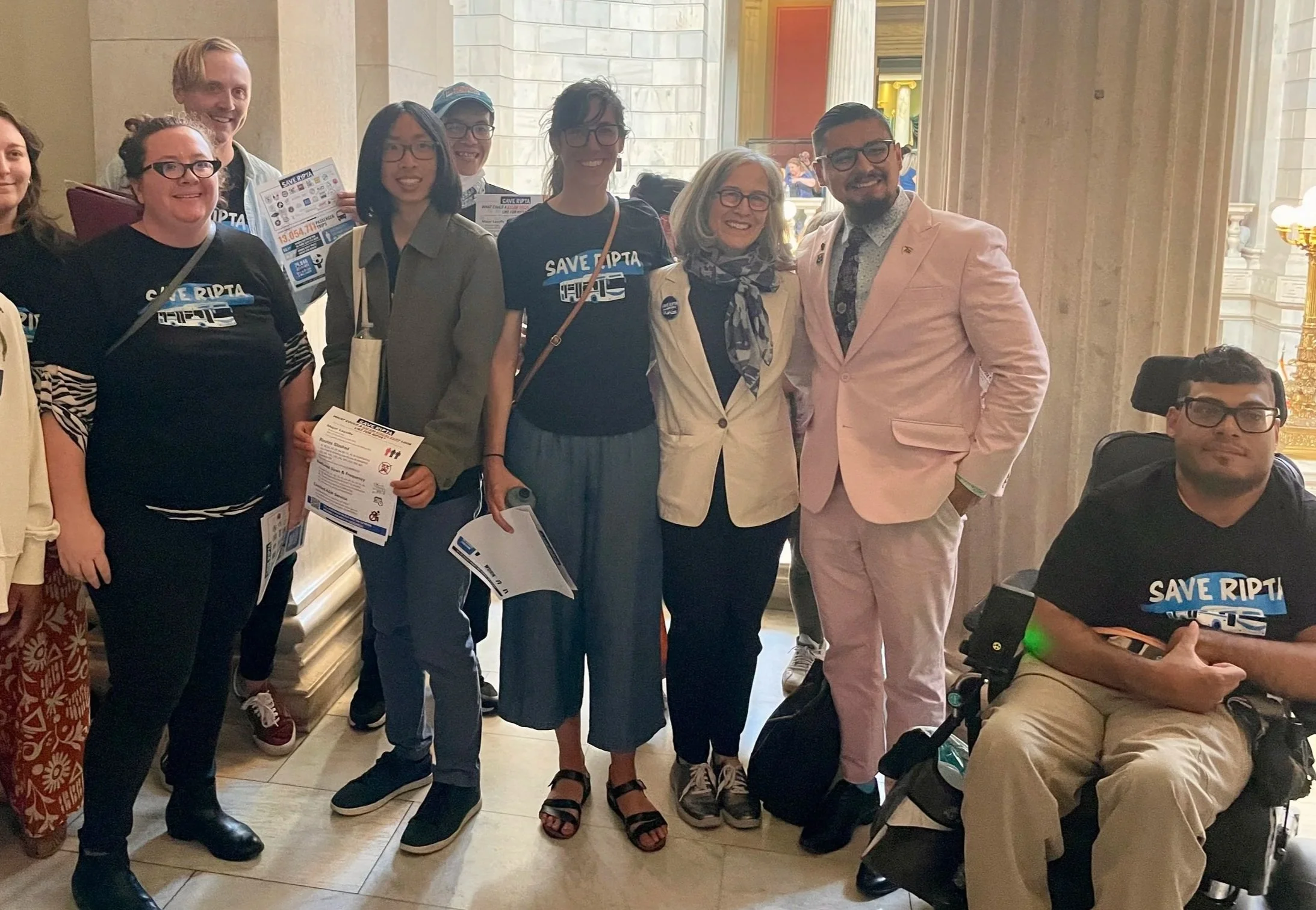
Public transportation should be comfortable, safe, and accessible for everyone. David will continue to lead the fight and organize with our neighbors to secure full state funding for RIPTA and prevent service cuts.
As Mayor, David will enter a partnership with RIPTA to provide free and universal bus rides for PPSD students (the same way that Brown University and RISD provide this service for their students).
No more means-testing and unnecessary paperwork, if you are a Providence student, you will receive access to free public transportation. David will also work with RIPTA to make sure that all of our bus stops have a canopy, comfortable seating, and local art. By investing in these small but meaningful improvements, we can create a RIPTA experience that works for everyone.
-
Following January’s major snow storm, too many of our neighbors were left in the dark, waiting days for side streets to be plowed, unsure whether city plows were even operating. This wasn’t a failure of frontline workers, it was a failure of systems, planning, and leadership.
Providence deserves a snow response system that is proactive, transparent, and built around public accountability.
After a winter of record snowfall, it’s become clear that Brett Smiley’s approach to snow removal isn’t just unsatisfactory—it was downright disastrous for many residents and small businesses. As Mayor, David Morales pledges to ensure snowfall doesn’t sideline life for locals through the implementation of the following plan.
Snow Removal Policy
-
David will launch a public-facing snow plow tracking map on the city’s website, allowing residents to see real-time snow removal activity during storm events and reducing confusion about where and when plows are operating.
The system will incorporate both city-operated plows and contracted snow removal vehicles, and will be modeled after successful platforms like the City of Rochester's PlowTrax system.
Future snow removal contracts will require participating vendors to support real-time location and activity reporting as part of standard performance expectations.
-
David will work with the City Council Committee on Public Works to reform the City’s snow removal procurement and contracting strategy, prioritizing expanded seasonal staffing to strengthen in-house capacity while maintaining strategic contractor support.
This approach will be centered on proactivity and accountability, including:
Onboarding winter contractors at the end of summer, not during emergencies
Aligning seasonal staffing levels and contractor capacity as part of a single, coordinated snow response plan
Establishing a standing, citywide snow response capacity aligned with historical storm severity (such as projections from the National Weather Service indicating over 10 inches of snow), rather than rebuilding response plans on an ad-hoc basis.
Structuring snow removal contracts with tiered capacity and snowfall-triggered surge provision, so additional plows and operators are automatically activated during severe storms.
Requiring clear performance standards and real-time reporting from all snow removal operators, including vendors
Establishing enforceable oversight and compliance mechanisms to ensure expectations are met during storm events.
-
Our administration will prioritize the clearing of streets, sidewalks, bus stops, and bike lanes because safe and accessible routes are critical to the lives of our neighbors, especially students, seniors, and residents with mobility challenges.
Months before winter, the City will put a clear operational plan in place. When forecasts indicate snowfall exceeding four inches, the City will activate pre-established contracts with local organizations and community groups to support sidewalk and bus stop clearing alongside municipal crews. By partnering with neighborhood based organizations, the City can create paid, short term work opportunities for underemployed residents who are able to assist with snow removal efforts.
For neighbors who rely on public transportation, the administration will coordinate with RIPTA to prioritize clearing transit critical corridors and high ridership bus stops (such as bus routes serving Lines 17, 19, 55, 56, 57, 92 and the R-Line).
-
David will appoint a Director of Public Works with real, relevant municipal public works experience, consistent with the responsibilities outlined in the Providence City Charter (Article X, Sec. 1002).
Running a city’s Department of Public Works is not an entry-level management role, especially in a city with aging infrastructure and increasing climate volatility. It requires deep operational knowledge, emergency response experience, labor management skills, and a proven track record of leading complex municipal systems.
Right now, Providence’s DPW is led by a Director without a background in municipal public work engineering or large-scale public works operations, and the consequences show up in real ways for our neighbors: disorganized storm response, weak contractor oversight, poor coordination across departments, and inconsistent communication.
-
David will ensure that parking bans remain in place long enough to allow for full, curb-to-curb snow clearing, with no premature lifting of restrictions while streets remain unsafe or inaccessible.
Public safety, accessibility, and full roadway clearance will take priority over speed or political convenience, so neighbors, emergency vehicles, transit, and service workers can move safely through the city after major storm events.
Parking maps will be proactively shared with residents who depend on street parking, ensuring clear guidance and accessible alternatives, such as city-owned lots, private parking garages, and church parking lots.
-
David will maintain proactive, transparent multilingual communication before, during, and after storm events through: regular press briefings, radio and television updates, coordinated messaging across social media and digital platforms, and neighborhood-level communication.